The Power Paradox: Why the AI Boom is Driving Record Energy Consumption in 2026
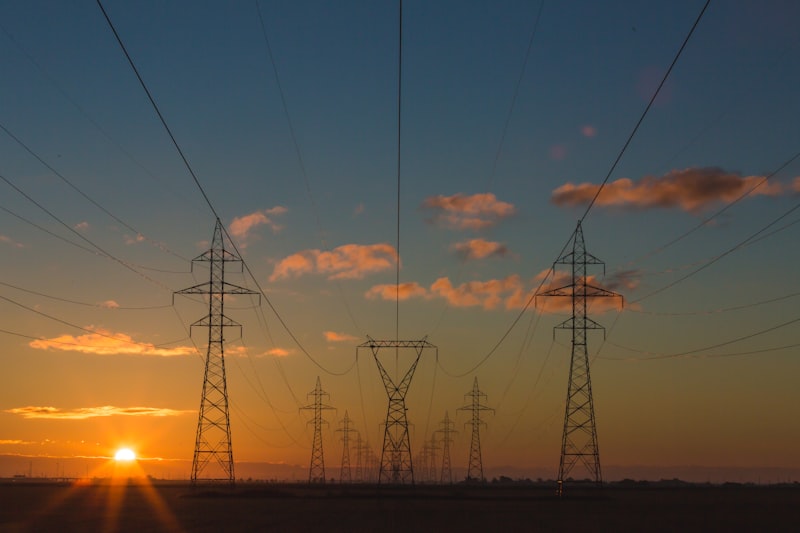
The Great Energy Crunch
In May 2026, the technology industry is facing its most significant paradox. We are building the most intelligent systems in human history—systems designed to solve complex global problems like climate change and resource optimization. Yet, the very infrastructure required to run these systems is driving the world’s energy consumption to record-breaking levels.
According to the latest report from the Energy Information Administration (EIA), the United States is projected to consume more electricity in 2026 than in any other year in history. The primary driver? The massive build-out of Hyperscale AI Data Centers.
1. The Anatomy of AI Energy Consumption
To understand the scale of the problem, we must look at the physical reality of a modern AI data center. A single rack of high-end AI servers in 2026 can consume up to 100 kilowatts (kW) of power—more than 10 times the density of a traditional cloud server rack.
Where does the power go?
- Inference & Training: 60% of the energy is consumed by the chips (GPUs, NPUs) as they process trillions of floating-point operations.
- Cooling: 30% is spent on thermal management. As chip density increases, air cooling is no longer sufficient. Most 2026 data centers are moving to Direct-to-Chip Liquid Cooling, which is more efficient but requires massive initial investment.
- Power Conversion: 10% is lost in the conversion of high-voltage grid power to the low-voltage DC current required by the chips.
2. The Rise of “Green AI Sovereignty”
As the “Energy Ceiling” becomes a real threat to the growth of Big Tech, we are seeing the rise of Green AI Sovereignty. Major tech firms are no longer just buying green energy credits; they are becoming Energy Producers.
- Small Modular Reactors (SMRs): Amazon and Microsoft have recently invested billions in co-locating their data centers with next-generation nuclear SMRs. This provides a “Zero-Carbon,” always-on power source that is completely independent of the public grid.
- Micro-Grids & Storage: Google has completed the world’s largest industrial battery array to store excess solar and wind power, ensuring their AI agents can run 24/7 on 100% renewable energy.
This shift means that in 2026, the most powerful AI companies are also becoming the world’s most innovative energy companies.
3. The Decoupling: Can Intelligence Survive Without Fossil Fuels?
The ultimate goal of the industry is to Decouple Intelligence from Energy. This is being approached from three angles:
A. Algorithmic Efficiency (The SQMM Breakthrough)
As we discussed in our recent deep dive on matrix multiplication, new algorithms are slashing the energy cost per token. By making AI “smarter” about which calculations it performs, we can reduce the power load of a single model by up to 50% without losing performance.
B. Specialized Silicon
Moving from general-purpose GPUs to Application-Specific Integrated Circuits (ASICs) for AI allows for much more efficient power usage. Intel’s new pivot to “Physical AI” chips is a prime example of this trend—silicon designed to perform specific robotic tasks with milliwatt-level power consumption.
C. Edge-First Inference
By moving AI tasks away from the massive data centers and onto the user’s device (the “Edge”), we can distribute the energy load across the entire global grid. A phone running a local model on its own NPU is far more efficient than a phone sending a request to a server 3,000 miles away.
4. The Economic Impact: Energy as the New Capital
In 2026, the “Cost of Intelligence” is essentially the “Cost of a Megawatt-Hour.” This is causing a shift in where tech companies are investing.
We are seeing a “Digital Migration” to regions with cheap, abundant renewable energy. Iceland, Canada, and parts of the Nordic region are becoming the new “AI Hubs of the North,” as companies seek to leverage both the cheap hydroelectric power and the naturally cold climates to reduce cooling costs.
5. The “OnlyBugs05” Perspective: Sustainable SaaS
At OnlyBugs05, we believe that Efficiency is a Security Feature. An inefficient system is a vulnerable system.
Our sustainability practice focuses on:
- Architecture Audits: Helping clients migrate from “Compute-Heavy” legacy systems to “Edge-First” architectures that reduce their carbon footprint and their cloud bills.
- Green Code Certification: We provide a specialized audit that measures the “Energy-per-User-Action” of your SaaS, helping you meet the new “Green Tech” reporting requirements of 2026.
- Localized Inference: We specialize in implementing on-device AI for mobile and web apps, ensuring that your users get the benefits of AI without the environmental cost of a round-trip to the cloud.
6. Looking Forward: The 2030 Net-Zero AI Goal
The industry has set an ambitious goal: Net-Zero Intelligence by 2030. This means that for every token generated, the energy used must be 100% carbon-free. While the 2026 energy crisis is a difficult hurdle, it is also the greatest accelerator of clean energy technology we have ever seen.
Conclusion: Powering the Future
The energy crisis of 2026 is not the end of the AI boom; it is the beginning of its maturation. We are moving from a “Quantity-First” approach to a “Quality-First” approach. The most successful companies of the next decade will not be the ones with the most compute, but the ones with the most Efficient Compute.
As we build the brains of tomorrow, we must make sure we aren’t burning the world of today.
Author: Jetti Hrushikesh (@OnlyBugs05) Infrastructure Engineer & Sustainability Strategist.